10 Stretching Mistakes That Slow Your Progress
The most common stretching mistakes: bouncing, holding your breath, stretching cold, rounding your back, forcing pain and more, with simple fixes for each.
By Ayoub Farid · · 2 min read
Stretching looks simple, but a few common mistakes can make it less effective, uncomfortable or occasionally risky. Fix these and you'll get more from every minute.
1. Bouncing
Bouncing at the end of a stretch can trigger a protective reflex that tightens the muscle. Fix: ease in, hold still, breathe.
2. Holding your breath
Holding your breath tenses your body. Fix: breathe slowly, exhale into the stretch. See breathing while stretching.
3. Going too far, too fast
Pain doesn't mean progress. Your body resists stretches it perceives as threatening. Fix: aim for mild-to-moderate tension (4–6 out of 10).
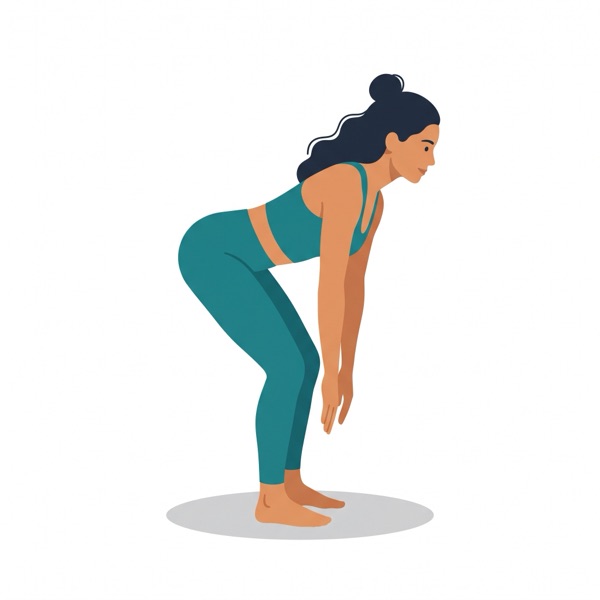
4. Rounding your back in forward bends
Reaching for your toes with a rounded spine shifts the stretch from your hamstrings to your lower back. Fix: hinge from the hips, bend your knees. See standing forward fold.
5. Arching in hip flexor stretches
Lunging forward with an arched back stretches your spine, not your hip flexors. Fix: tuck your pelvis and squeeze the back glute. See hip flexor stretches.
6. Holds that are too short
"30 seconds" often turns into 10 when you count in your head. Fix: use a timer. See how long to hold a stretch.
7. Stretching cold, hard
Deep stretches on cold muscles feel worse and progress less. Fix: warm up with a walk, a shower or dynamic moves first, especially in the morning.
8. Only stretching what feels tight
Tight hamstrings may come with tight calves and hips. Fix: use balanced routines that cover the whole chain. See full body stretch routine.
9. Long static holds right before explosive exercise
Long holds right before sprinting or jumping may slightly reduce power. Fix: dynamic warm-up before, static after. See static vs dynamic stretching.
10. Inconsistency
One long session a week doesn't beat five short ones. Fix: stretch 5 minutes most days. See how to build a stretching habit.
Bonus: ignoring warning signs
Stop and seek advice if you feel:
- Sharp or stabbing pain.
- Tingling, numbness or pins and needles.
- Pain in the joint rather than the muscle.
- Pain that lingers for hours after stretching.
How Suppl helps you avoid these
Every stretch in Suppl has a short safety cue (such as "move slowly and stop if you feel sharp pain"), a timer that keeps holds honest, and routines that cover connected muscle groups. The AI stretch coach can answer "why do I feel this in my knee?" in the moment.
Frequently asked questions
Is it bad to stretch when sore?
Gentle stretching is fine. Avoid deep, forceful stretching of very sore muscles.
Should stretching hurt?
No. Mild tension is normal; pain is a signal to ease off.
Can stretching wrong cause injury?
Forcing, bouncing or stretching through sharp pain increases risk. Gentle, controlled stretching is low risk.
What's the most common stretching mistake?
Inconsistency, followed by forcing stretches too far.