
Stretching for Seniors: Safe Daily Routine for Older Adults
A safe daily stretching routine for older adults: chair and standing stretches for neck, shoulders, back, hips and legs, plus balance tips and safety notes.
By Ayoub Farid · · 2 min read
Flexibility tends to decline with age, partly because we move through smaller ranges each year. Gentle daily stretching helps keep everyday movements easier: reaching shelves, putting on shoes, turning to look behind you, getting up from a chair. Programs for older adults have ranked among the top worldwide fitness trends in ACSM's surveys for five years running, with a focus on balance, strength and mobility.
Safety first
- Check with your doctor before starting if you have heart conditions, osteoporosis, joint replacements, recent surgery or balance problems.
- Use a sturdy chair without wheels and stand near a wall or counter.
- Move slowly. Stretch to mild tension, never pain.
- Breathe normally; don't hold your breath.
- With osteoporosis, avoid deep forward rounding and forceful twisting unless your clinician approves.
The 8-minute senior stretching routine
Seated (4 minutes)
- Neck side stretch: 20 s per side.
- Shoulder rolls: 10 slow rolls.
- Seated chest opener: hands behind you on the chair, lift your chest. 20 s.
- Seated twist: gentle, hand on the chair back. 15 s per side.
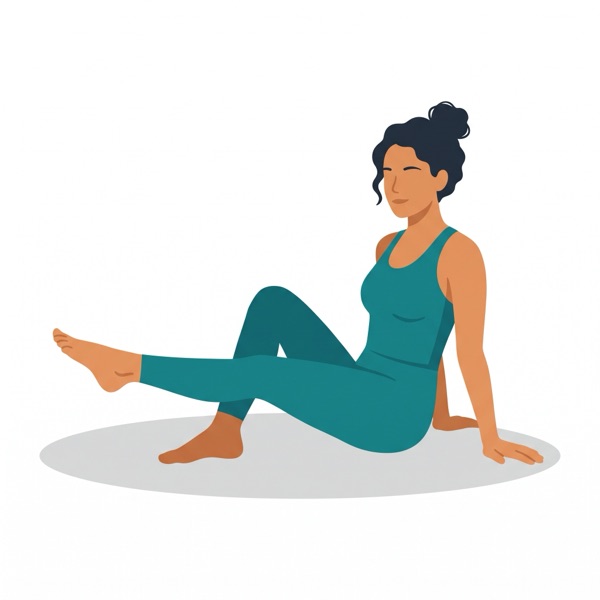
- Seated hamstring stretch: one leg straight, heel on floor, lean forward slightly. 20 s per side.
- Seated figure-4: if comfortable, ankle on knee. 20 s per side.
- Ankle circles: 10 each direction per foot.
Standing with support (4 minutes)
- Wall calf stretch: 30 s per side.
- Standing quad stretch holding the counter (or use a strap): 20 s per side.
- Standing hip flexor stretch: staggered stance, 20 s per side.
- Standing side bend: 15 s per side.
- Wall angels or arm slides up a wall: 8 reps.
Add balance and strength
Stretching is one piece. For safer daily life, older adults also benefit from:
- Balance: stand on one foot holding the counter, 10–20 s per side.
- Sit-to-stand: stand up from a chair without hands, 8–10 reps.
- Walking most days.
How long to hold stretches
Many guidelines suggest around 30–60 seconds for older adults. See how long to hold a stretch.
Make it a habit
Same time each day, maybe after breakfast or before your afternoon walk. See how to build a stretching habit.
Do it with Suppl
Suppl's routines are short (2–5 minutes), clear illustrations show each stretch, 64 of 66 stretches are beginner level, and the timer does the counting. Desk Break Reset works well seated. See also chair stretches and standing stretches.
Frequently asked questions
How often should seniors stretch?
Most days, ideally daily, for 5–10 minutes.
Is it ever too late to improve flexibility?
No. Older adults can improve range with regular stretching.
What stretches should seniors avoid?
Bouncing, deep forceful twisting and positions that challenge balance without support. Follow medical advice for specific conditions.
Can stretching help with arthritis?
Gentle movement is often recommended for arthritis stiffness. Ask your doctor what suits you.