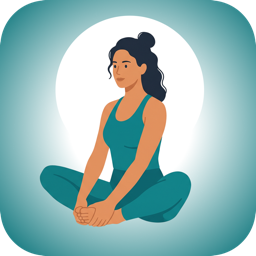
Bedtime Stretches for Better Sleep: A Calming 5-Minute Routine
A calming bedtime stretch routine to relax your body before sleep: slow floor and in-bed stretches with long exhales, plus tips for a better wind-down.
By Ayoub Farid · · 2 min read
A few slow stretches before bed help you shift from "busy day" mode into rest. They release tension you've carried in your neck, back and hips, and slow breathing during stretching helps you relax. You don't need to be flexible, just slow.
What makes a good bedtime stretch
- Slow and passive: positions you can relax into.
- Mostly lying or seated: nothing that wakes you up.
- Paired with long exhales.
- Short: 2–6 minutes.
Avoid intense or energizing moves (jumping, fast flows) right before bed.
The 5-minute bedtime routine
1. Cat-cow (45 s)
Slow, with your breath: inhale to arch, exhale to round. See cat-cow stretch.
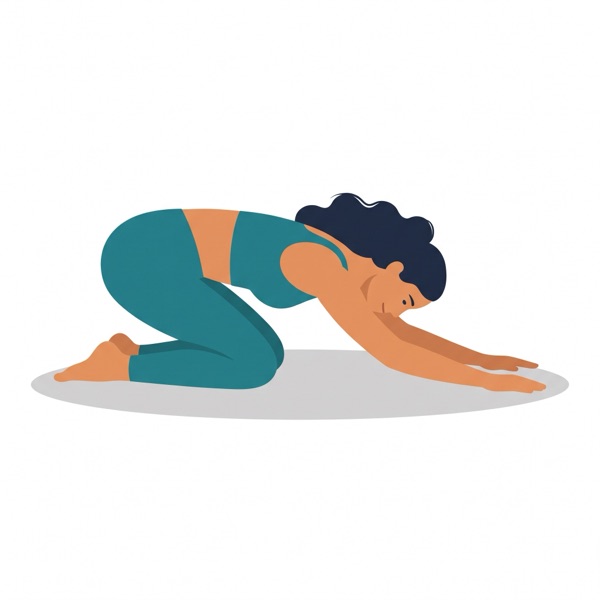
2. Child's pose (60 s)
Knees wide, forehead down, arms forward or by your sides. Breathe into your back. See child's pose.
3. Butterfly stretch (45 s)
Seated, soles together, let your knees fall open. Fold forward gently if comfortable. See butterfly stretch.
4. Side neck stretch (20 s per side)
Ear toward shoulder; let gravity do the work.
5. Supine spinal twist (30 s per side)
In bed or on the floor, knees to one side, arms wide. See supine spinal twist.
6. Legs up the wall (60 s+)
Lie with your legs resting up a wall or headboard. Many people find this very calming.
Breathing for sleep
Try a 4–6 pattern during each stretch: inhale for 4 counts, exhale for 6. Longer exhales help your body relax. More in breathing while stretching.
The 2-minute version
Suppl's Sleep routine is a short sequence of calming stretches, including cat-cow, butterfly and side neck stretch, with a gentle guided timer. Press start, then put your phone away.
Tips for a better wind-down
- Dim the lights before you start.
- Stretch at the same time every night; it becomes a signal to your brain.
- Keep your phone on Do Not Disturb.
- If you wake up stiff, add a few stretches to do in bed in the morning too.
Create a consistent wind-down
Your body learns cues. If you stretch at the same time every night, in the same place, with the same dim lighting, the routine itself becomes a signal that sleep is coming. Pair it with other cues: a warm shower before, a cup of herbal tea, a book instead of a screen after. Within a couple of weeks, many people find they feel sleepy shortly after finishing the routine.
Frequently asked questions
Does stretching before bed help you sleep?
Many people find gentle stretching and slow breathing help them relax before sleep. It's a simple, low-risk habit to try.
How long should I stretch before bed?
2–10 minutes of slow stretching is plenty.
Can I stretch in bed?
Yes. Knee-to-chest, twists and butterfly work well on a mattress.
What stretches should I avoid before bed?
Fast, energizing moves and deep, intense holds. Keep it calm. For stress relief, see stretching for stress.